When you’re planning a roof replacement in Central Florida, understanding building codes isn’t just about staying legal—it’s about protecting your investment and your family. Alan’s Roofing has spent over three decades helping homeowners navigate Florida’s strict roofing regulations, and we’ve seen firsthand how proper code compliance often determines whether a roof lasts 25 years or fails after the first major storm.
Florida’s building codes exist for good reason: our climate brings intense UV exposure, torrential rains, and hurricane-force winds that test every roof system to its limits. Whether you’re replacing storm-damaged shingles or upgrading an aging roof, knowing what the law requires—and what quality contractors deliver beyond the minimum—helps you make smarter decisions for your home.
Understanding Florida’s Current Roof Replacement Requirements
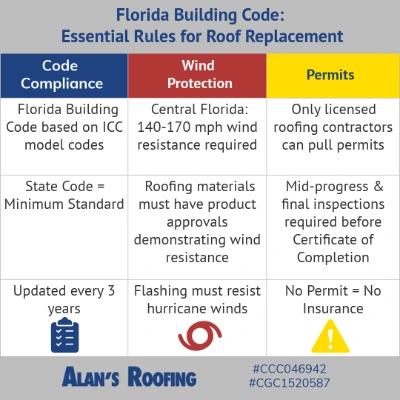
Florida maintains some of the nation’s strictest roofing standards through the Florida Building Code (FBC), which is updated every three years to reflect new construction technologies and lessons learned from recent hurricanes. Most residential roof replacement projects are governed by the 7th or 8th Edition of the Florida Building Code, depending on local adoption timelines, and many municipalities add their own requirements on top of the state code.
All communities in Florida follow these state standards while enforcing specific permitting procedures and inspection schedules. Your roof replacement must meet wind resistance ratings based on your home’s location, exposure, and distance from the coast, typically requiring materials rated to withstand wind speeds of around 130–150 mph in our region. The code also mandates specific underlayment types, attachment methods, and edge treatments that work together as a complete roofing system.
Licensed contractors like Alan’s Roofing stay current with these evolving requirements, but homeowners benefit from understanding the basics before interviewing potential contractors or reviewing project proposals.
The 25% Rule: What Florida Homeowners Need to Know
One of the most misunderstood aspects of Florida roofing law is the so-called “25% Rule,” which can trigger full roof replacement requirements under specific circumstances. The rule states that if repairs or replacement affect more than 25% of your roof area within a 12-month period, the entire roof must be brought up to current building code standards—even the portions you’re not actively replacing.
This means you can’t simply patch or partially replace an aging roof without potentially triggering a full code-compliant replacement. The 25% threshold includes all work performed in that year, so multiple smaller repair projects can add up faster than many homeowners expect.
Because the application of this rule can vary depending on roof type, cause of damage, and local interpretation, any substantial repair project should begin with a full roof inspection. Understanding where your roof stands relative to this threshold can help avoid unexpected compliance issues later.
Hurricane Code Considerations for Central Florida Roofs
Living in Central Florida means preparing for hurricanes, not assuming they’ll miss us. The Florida Building Code includes specific wind-resistance and attachment requirements designed to keep roofing systems connected and performing during extreme weather events.
Roof decking attachment must meet current code standards, often requiring ring-shank nails installed in enhanced fastening patterns—commonly tighter along edges than in field areas—depending on wind zone, deck thickness, and local requirements. Underlayment must be a code-approved product suitable for Florida’s climate and wind conditions, and roof edge details such as metal drip edge are required to help prevent water intrusion during wind-driven rain.
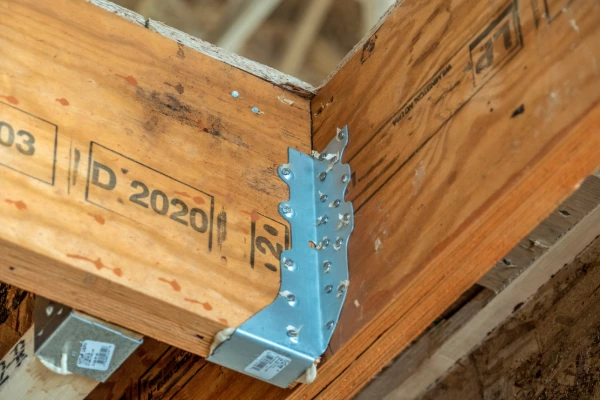
Roof-to-wall connections, such as straps or clips, are required for new construction and may be evaluated during reroof projects when structural components are exposed. In most standard reroof replacements, existing connections are inspected rather than automatically upgraded, unless specific retrofit conditions are triggered.
These requirements are verified through the inspection process and are essential components of a code-compliant roof replacement.
Secondary Water Barriers: When They’re Required
Secondary water barriers provide an added layer of protection beyond standard underlayment, and Florida code requires them in certain situations. In High Velocity Hurricane Zones (HVHZ)—which include Miami-Dade and Broward counties—self-adhering underlayment is mandatory. While Port Charlotte falls outside the HVHZ, enhanced underlayment may still be required depending on roof pitch, material type, and local code interpretation.
Low-slope roofs may require self-adhering or enhanced underlayment systems to reduce the risk of wind-driven water intrusion. Even when not strictly required, many quality contractors recommend secondary water barriers in valleys, around penetrations, and along eaves as an added safeguard.
These self-sealing membranes bond directly to the roof deck and help seal around nail penetrations, offering extra protection if roofing materials are damaged during severe storms.
Roof-Over Projects: What Florida Law Allows
Installing a new roof over existing shingles—often called a roof-over or overlay—is permitted under Florida code only in limited circumstances. Residential roofs are allowed a maximum of two layers of asphalt shingles. If your home already has two layers, a full tear-off down to the decking is required.
Even when an overlay is technically allowed, most experienced contractors recommend against it. Roof-overs can conceal deck damage, add unnecessary weight, shorten the lifespan of the new roof, and complicate future repairs. In many cases, manufacturer warranties are also reduced or voided when overlays are used.
All roof-over projects still require proper permitting and inspections. At Alan’s Roofing, we rarely recommend overlays because full tear-offs allow us to inspect decking, address ventilation, and install modern underlayment systems that improve long-term performance.
Permit Requirements: When You Need Official Approval
Nearly all roof replacement projects in Port Charlotte and Central Florida require building permits, though requirements vary by municipality and scope of work. Full roof replacements always require permits, which typically include plan review for materials, attachment methods, and wind resistance compliance.
Minor repairs—often defined as small areas not involving structural components—may not require permits, but many homeowners choose to obtain them anyway to document proper workmanship. Permits also trigger inspections that verify code compliance, protect homeowners from substandard work, and create public records useful for insurance claims or future home sales.
Permit fees in Charlotte County typically range from a few hundred dollars, depending on project size, with approval timelines varying by jurisdiction. Inspections are usually scheduled at key phases of the project, such as after deck repairs, underlayment installation, and final roofing completion.
Verifying Your Contractor’s Code Compliance
Not all roofing contractors approach code compliance with the same level of care. Florida roofing contractors must hold either a Certified Roofing Contractor license issued by the state or a Registered Roofing Contractor license issued locally. Homeowners can verify licensing, insurance, and complaint history through the Florida Department of Business and Professional Regulation.
A reputable contractor should provide a written proposal outlining materials, wind ratings, underlayment systems, flashing details, and permit responsibilities. Contractors should pull permits on your behalf and provide permit numbers for verification.
Asking about inspection history, references from recent projects, and how unexpected findings are handled during tear-off can offer insight into a contractor’s professionalism. Contractors who suggest skipping permits, cannot explain basic code requirements, or push roof-overs without justification, should raise concern.
What May Be Changing in the 2026 Code Update
Florida’s next building code update is scheduled to take effect in late 2026. While final provisions are still subject to adoption, proposed updates are expected to address evolving wind-resistance standards, improved attic ventilation guidance, and updated requirements for integrating rooftop solar systems.
Future changes may also strengthen flashing and penetration details to better manage Florida’s heavy rain and wind conditions. These updates would apply only to projects permitted after the new code takes effect.
Homeowners planning roof replacements in late 2026 or beyond should work with contractors who monitor upcoming code changes and participate in continuing education. Alan’s Roofing stays engaged with industry training to ensure our roof systems align with both current and emerging standards.
Your Code Compliance Checklist
Before signing a roof replacement contract, confirm your project includes these key compliance elements:
Frequently Asked Questions About Florida Roof Replacement Codes
Yes. Florida’s 25% rule remains in effect and continues to trigger full code compliance when repair work exceeds one-quarter of the roof area within a 12-month period.
Florida law allows insurers to consider roof age when underwriting or renewing policies. Requirements vary by carrier, and inspections are commonly requested after 15 to 20 years.
No. They are required in High Velocity Hurricane Zones and in certain roof configurations, but are often recommended statewide for added protection.
Not in all cases. Roof-to-wall connections are required for new construction and may be evaluated during reroof projects if structural components are exposed.
Possibly, if only one existing layer is present. However, overlays reduce performance and lifespan, which is why many contractors recommend full tear-offs.
Small repairs may not require permits, but obtaining one can help document proper work and avoid future issues.
Proposed updates may include enhanced wind standards, improved ventilation guidance, and updated solar integration requirements.
Protect Your Investment With Proper Code Compliance
Florida’s roof replacement codes can seem complex, but they exist to protect homeowners from the unique challenges of our climate. Working with an experienced, licensed contractor who understands current requirements and stays informed about upcoming changes helps ensure your new roof performs as intended.
At Alan’s Roofing, our decades of experience serving Central Florida homeowners means we’ve navigated every code cycle and inspection process. We focus on building roofing systems that meet or exceed code requirements while prioritizing long-term durability and performance.
Contact Alan’s Roofing today for an inspection and detailed proposal explaining how your roof replacement will comply with current Florida Building Code standards. Our team will guide you through permitting, inspections, and installation—so you can move forward with confidence.