A new roof ranks among the largest purchases most homeowners will ever make. Figuring out how to pay for a new roof can feel overwhelming. At Alan’s Roofing, we have helped Florida homeowners and business owners work through this decision since 1987, and the good news is that you have more options than you might think.
Some homeowners use savings. Others file a homeowners’ insurance roof claim after a storm. Many choose roof replacement financing to protect their home now and pay over time. The right choice depends on your budget, your credit, the condition of your roof, and how quickly you need the work done.
In Florida, where rainstorms and hurricanes are part of life, waiting too long can turn a small problem into a costly one. There are pros and cons to each payment option, and knowing them helps you move forward with confidence.

What Are the Main Ways Homeowners Pay for a New Roof?
If you are asking, “How can I pay for a new roof?” you are not alone. Most homeowners use one of a handful of methods, or a mix of them. The most common choices include cash or savings, homeowners’ insurance, contractor financing, personal loans, home equity loans, and government-backed programs.
Each one comes with its own costs, timelines, and requirements. Cash avoids interest but can drain your emergency fund. Insurance can cover a large share of the bill, but only for certain types of damage. Loans spread out the cost but add interest. Understanding how each option works helps you pick the path that fits your finances without putting off a repair your home needs.
Cash and Savings
Paying with cash is the simplest way to pay for a new roof. There are no applications, no interest charges, and no monthly payments to track. The downside is that a full roof replacement can use up a large part of your savings. If paying cash would leave you without a safety net for medical bills, car repairs, or the next storm, a financing option may be the smarter move, even with interest.
Contractor Financing
Many roofing companies that offer financing partner with a bank or lender, so you can apply right through your contractor. Alan’s Roofing offers new roof financing through Regions Bank®, which simplifies the process by allowing you to discuss your estimate and payment options at the same time. Contractor financing is designed for home improvement projects, so the amount you borrow aligns with the actual cost of your roof. It is a popular choice for homeowners who want to replace an aging or damaged roof now instead of waiting until they have saved enough.
Personal Loans
A personal loan is an unsecured roof loan, which means your home is not used as collateral. You apply to a bank, credit union, or online lender, and funds are often deposited directly into your account. Your credit score and income affect your interest rate, so borrowers with strong credit tend to get the best terms. Personal loans usually have shorter repayment periods than home equity loans, which can mean higher monthly payments.
Government-Backed Loan Programs
The FHA Title I Property Improvement Loan program helps homeowners finance repairs and upgrades, including roofing, through approved lenders. These loans can be an option for homeowners with little equity in their homes. Some local governments and nonprofits also offer repair assistance for seniors, veterans, or low-income households. Availability changes often, so check with your county housing office or a HUD-approved lender to see which programs are open in your area.
Does Homeowners Insurance Cover the Full Cost of a New Roof?
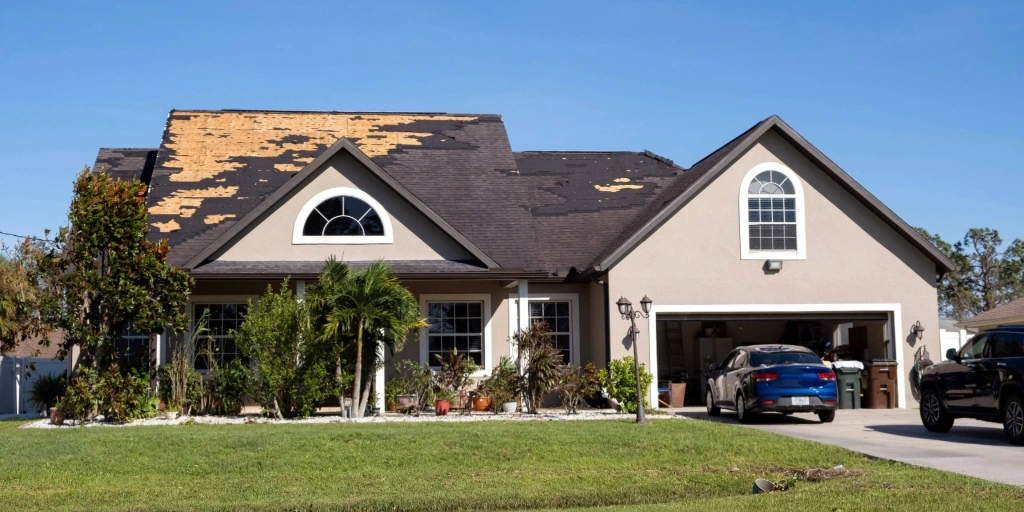
In most cases, homeowners’ insurance does not cover the full cost of a new roof. Policies are designed to pay for sudden, accidental damage, such as a tree falling on your home or high winds tearing off shingles during a hurricane. They generally do not pay to replace a roof that is simply old or worn out.
Even when roof storm damage is covered, you will still pay your deductible, and your payout may be reduced based on the age of your roof. Every policy is different, so reviewing your declarations page and talking with your agent is the best way to know what your plan includes before you need it.
Actual Cash Value vs. Replacement Cost
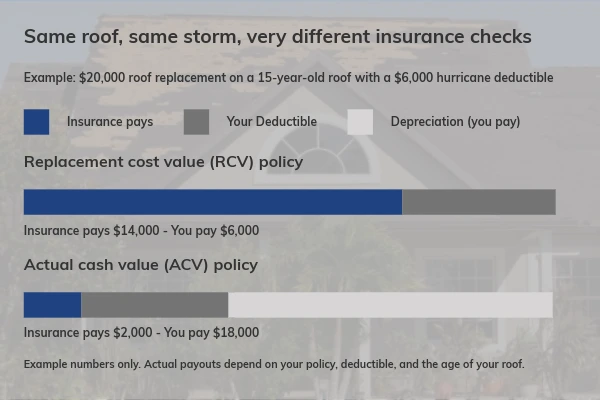
Your policy will usually pay for roof damage in one of two ways. Replacement cost value (RCV) pays the cost to install a new roof today, minus your deductible. An actual cash value (ACV) policy covers what your roof is worth today, after age and wear have been factored in.
With ACV coverage, an older roof may bring only a small payout, leaving you to cover the rest. Some Florida policies limit older roofs to ACV coverage, so check which one applies to you. (Actual Cash Value in Home Insurance – A Florida Guide, 2026)
Hurricane Deductibles in Florida
Florida homeowners often have a separate hurricane deductible. Instead of a flat dollar amount, it is usually a percentage of your home’s insured value, commonly between 2% and 10%. For example, on a home insured for $300,000, a 2% hurricane deductible means you would pay the first $6,000 of a covered hurricane claim. Knowing this number ahead of time helps you plan, and financing can help cover the gap between your deductible and your savings.
Tips for Filing a Homeowners Insurance Roof Claim
Act quickly after a storm. Take photos of the damage from the ground, save receipts for any emergency repairs, and contact your insurance company to start the claim. Schedule a professional roof inspection, so you have a detailed record of what was damaged.Having a skilled roofer present during the adjuster’s visit helps bring hidden storm damage to light. Florida law also sets deadlines for filing claims, so do not wait.
What Credit Score Is Needed to Finance a Roof Replacement?
There is no single credit score required for roof replacement financing. Each lender sets its own rules, and the minimum often depends on the type of loan. In general, a higher score gives you better approval odds, lower interest rates, and more flexible terms.
Home equity products tend to have stricter requirements, and many lenders look for scores in the mid-600s or higher. Some personal loans and contractor financing programs may approve borrowers with lower scores, though usually at higher rates. Lenders also review your income, existing debt, and payment history, so your credit score is only one part of the picture.
What to Do If Your Credit Needs Work
A lower score does not have to stop you from replacing your roof. Check your credit report for errors, since fixing mistakes can raise your score. Paying down credit card balances can also help. If you need the roof right away, ask about applying with a co-borrower who has stronger credit. Comparing offers from multiple lenders helps you find the most affordable terms available to you.
Can a Home Equity Loan Be Used to Pay for a Roof?
Yes. A home equity loan is one of the most common ways to pay for roof replacement, especially for larger projects. It lets you borrow against the value you have built up in your home. Because the loan is secured by your property, interest rates are often lower than those on personal loans or credit cards.
Repayment terms can stretch over many years, which keeps monthly payments manageable. The trade-off is that your home serves as collateral, so missed payments put your property at risk. You will also need enough equity to qualify, and the process usually involves an appraisal and closing costs.
Home Equity Loan vs. HELOC
A home equity loan gives you one lump sum with a fixed interest rate and a set monthly payment. That makes it easy to budget for a single project like a new roof. A home equity line of credit, or HELOC, works more like a credit card. You draw money as needed and usually pay a variable rate. A HELOC can make sense if you plan other home upgrades, but your payment may change over time.
How Long Does Roof Financing Approval Take?
Approval times vary depending on the type of financing you choose. Contractor financing and personal loans are often the fastest options. Many applications are reviewed within a day or two, and some decisions come back the same day.
Home equity loans and HELOCs take longer because the lender needs to verify your income, order an appraisal, and schedule a closing. That process commonly takes several weeks. Insurance claims follow their own timeline, which depends on your insurer, the adjuster’s schedule, and how many claims are being filed after a major storm. If your roof is leaking now, ask about temporary repairs while you wait.
How to Speed Up the Process
Gather your documents before you apply. Most lenders ask for proof of income, recent tax returns, a photo ID, and details about your home. Having a written estimate from your roofing contractor also helps, since it shows the lender exactly how much you need to borrow. Responding quickly to any follow-up requests keeps your application moving.
How to Choose the Right Way to Pay for Your Roof
The best option depends on your situation. If a storm has damaged your roof, start with your insurance company and use financing to cover your deductible or any gaps. If your roof is simply aging, compare roof loan options based on interest rate, monthly payment, and total cost over the life of the loan.
Homeowners with plenty of equity may save on interest with a home equity loan, while those who want speed and simplicity often choose contractor financing. Whatever you decide, avoid putting off a needed replacement. Small leaks can lead to rotted decking, mold, and interior damage that cost far more to fix later. A new roof adds beauty, value, and protection that pays off for years.
Contact Alan’s Roofing Today
Paying for a new roof is easier when you have a trusted team on your side. Alan’s Roofing is a family-owned, fully licensed, and insured roofing company in Port Charlotte with more than 30 years of experience. We serve Port Charlotte, Punta Gorda, Englewood, and communities across Central and Southwest Florida. Our own employees handle every job, so you never deal with subcontractors.
We offer free roof estimates, professional roof inspections, storm damage repair, and financing through Regions Bank. We also install quality roofing products from trusted manufacturers like Owens Corning®. Whether you are filing a claim or exploring roof replacement financing, we are ready to help. Contact Alan’s Roofing today to schedule your free estimate.